

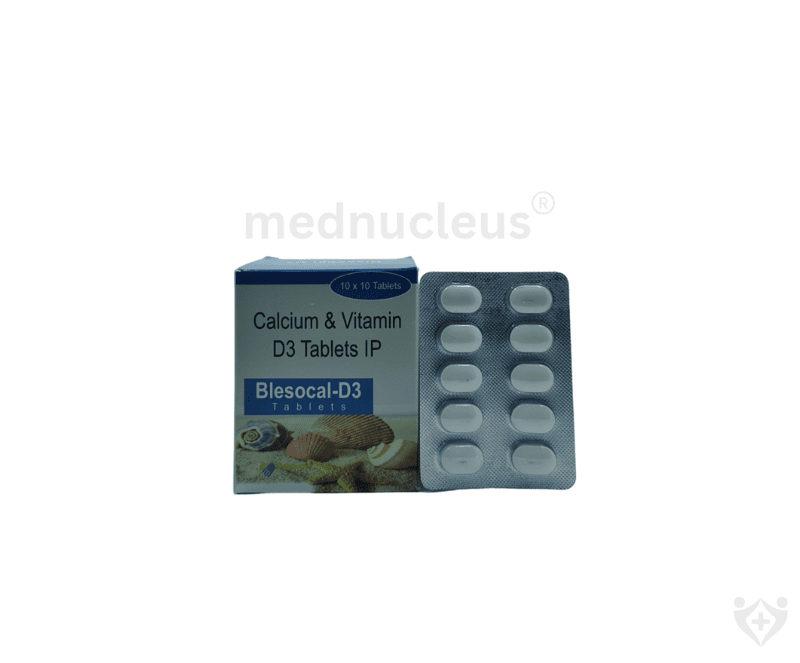
Category Name Bone & Joint Health — Calcium Supplement + Vitamin D3 Combination
Common Indications
- Osteoporosis prevention and adjunct treatment
- Osteomalacia and rickets (Vitamin D and calcium deficiency)
- Hypocalcaemia (low blood calcium)
- Vitamin D deficiency and insufficiency
- Bone health support in postmenopausal women and the elderly
- Pregnancy and breastfeeding calcium supplementation
- Adjunct therapy in patients on long-term corticosteroids or anticonvulsants
- Dental health and normal muscle and nerve function support
Common Dosing
- Standard Adult Dose: One tablet once or twice daily, with or after meals
- Elemental Calcium per tablet: 500 mg (from 1250 mg Calcium Carbonate) + 250 IU Vitamin D3
- Best absorbed with food — Calcium Carbonate requires gastric acid for optimal absorption
- Elderly patients often require higher supplementation; dose guided by serum levels
Always follow your doctor's prescribed dose and duration.
Common Side Effects
- Constipation (most common)
- Bloating and flatulence
- Nausea or stomach discomfort
- Belching or chalky aftertaste
Signs of hypercalcaemia (excess calcium) — seek medical attention:
- Excessive thirst, frequent urination
- Muscle weakness or confusion
- Kidney stones
- Irregular heartbeat
Common Interactions
- Bisphosphonates — Separate by at least 2 hours
- Levothyroxine (thyroid medication) — Separate by at least 4 hours
- Antibiotics (Tetracyclines, Fluoroquinolones) — Separate by 2–3 hours
- Iron supplements — Separate by at least 2 hours
- Thiazide diuretics — May increase hypercalcaemia risk with calcium supplements
Special Instructions
| Condition | Guidance |
|---|---|
| 🤰 Pregnancy | Safe and often recommended for fetal bone development. Use as directed by your doctor. |
| 🤱 Breastfeeding | Generally safe. Supports maternal and infant bone health. Consult your doctor. |
| 🍺 Alcohol | Avoid excess. Alcohol impairs calcium absorption and accelerates bone loss. |
| 🚗 Driving | No effect on driving ability. |
| 🫀 Liver Disease | Use with caution. Vitamin D3 requires hepatic activation. Monitor levels. |
| 🫘 Kidney Disease | Use with caution. Risk of hypercalcaemia and kidney stones. Monitor calcium and renal function. |
Mechanism of Action
- Calcium Carbonate: Directly replenishes the body's calcium pool, supporting bone mineralisation, nerve transmission, muscle contraction, and cardiac function
- Vitamin D3 (Cholecalciferol): After hepatic and renal activation to calcitriol, promotes active intestinal calcium absorption, reduces urinary calcium loss, and facilitates calcium deposition into bone matrix
Together they form an essential therapeutic duo for bone health — Calcium provides the structural mineral and Vitamin D3 ensures its optimal absorption and utilisation.
Instructions to Take
- Take with or after meals — Calcium Carbonate absorption depends on gastric acid
- If taking two doses daily, space morning and evening doses evenly
- Do not take more than 500–600 mg elemental calcium at one time
- Separate from other medications by at least 2 hours
- Maintain adequate daily hydration to reduce kidney stone risk
- Swallow or chew as directed on the product label
- Store in a cool, dry place away from sunlight and moisture
This information is intended for general reference purposes only and should not be used as a substitute for professional medical advice, diagnosis, or treatment. Always consult a qualified healthcare professional before starting, changing, or stopping any medication.

