

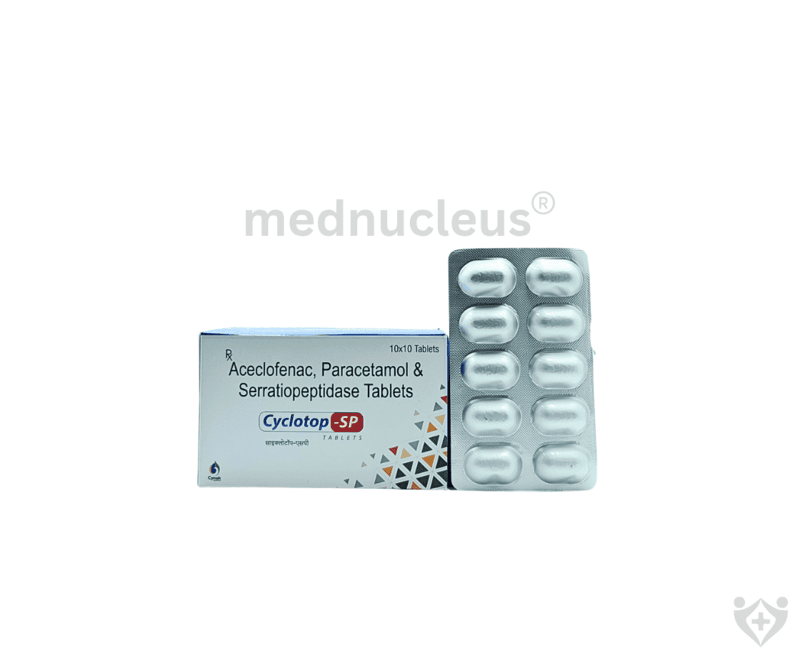
Category Name Pain Killers / NSAID with Analgesic & Anti-Inflammatory Enzyme
Common Indications CYCLOTOP-SP is indicated for the short-term relief of moderate to severe pain, inflammation, and swelling associated with musculoskeletal, joint, and post-operative conditions. It is commonly prescribed for:
- Rheumatoid arthritis with associated joint pain, swelling, and stiffness
- Osteoarthritis with chronic joint pain and inflammation
- Ankylosing spondylitis and axial inflammatory joint conditions
- Post-operative pain and soft tissue swelling requiring combined analgesic and enzyme therapy
- Acute musculoskeletal pain, myalgia, and sports-related injuries
- Lower back pain and lumbar spondylitis
- Post-traumatic oedema and inflammation with associated tissue congestion
- Toothache and post-dental procedure pain and swelling
- Dysmenorrhoea (menstrual pain) and pelvic inflammatory pain
- Ear, nose, and throat inflammatory conditions with associated pain and oedema
Common Dosings One tablet (Aceclofenac 100 mg + Paracetamol 325 mg + Serratiopeptidase 15 mg) orally, twice daily after food — or as directed by your physician. The dose and duration of therapy should be determined by the treating physician based on the condition being treated, severity of symptoms, and clinical response. Use the lowest effective dose for the shortest duration necessary to control symptoms. Do not exceed the prescribed dose or use for prolonged periods without medical supervision.
Common Side Effects The following side effects may occur during the course of treatment. Consult your doctor if any of these persist or worsen:
- Nausea or vomiting
- Stomach pain or abdominal discomfort
- Indigestion or heartburn
- Diarrhoea or loose stools
- Loss of appetite
- Dizziness or lightheadedness
- Drowsiness or fatigue
- Increased liver enzymes (detected on routine blood tests — inform your doctor promptly if noted)
- Skin rash or allergic reaction — inform your doctor promptly
- Signs of gastrointestinal bleeding such as black or tarry stools or vomiting blood — seek immediate medical attention if these occur
- Signs of liver damage such as yellowing of skin or eyes, dark urine, or persistent upper abdominal pain — inform your doctor immediately
- Serious allergic reactions such as facial swelling, difficulty breathing, or severe skin reactions — seek immediate medical attention if severe
Common Interactions Inform your doctor about all medications, supplements, and herbal products you are currently taking. Notable interactions include:
- Anticoagulants (Warfarin) / Antiplatelet Drugs (Aspirin, Clopidogrel): Aceclofenac may significantly increase the risk of gastrointestinal bleeding when used concurrently — regular INR monitoring and close clinical observation are strongly recommended
- Other NSAIDs / Corticosteroids: Concurrent use may substantially increase the risk of gastric irritation, ulcers, and gastrointestinal bleeding — avoid combination use without strict medical supervision
- Enzyme-Inducing Drugs (Phenytoin, Carbamazepine, Rifampicin): May accelerate the metabolism of Paracetamol, increasing the production of hepatotoxic metabolites and the risk of liver damage with prolonged use — avoid concurrent use where possible
- Alcohol: Concurrent use may significantly increase the risk of gastric irritation, gastrointestinal bleeding, and hepatotoxicity — strictly avoid alcohol during therapy
- Diuretics & ACE Inhibitors / ARBs: Aceclofenac may reduce the effectiveness of antihypertensive and diuretic medications and increase the risk of renal impairment — use with caution under close medical supervision
- Lithium & Methotrexate: Aceclofenac may increase the plasma concentrations of these drugs, raising the risk of serious toxicity — concurrent use requires careful clinical and laboratory monitoring
- Other Paracetamol-Containing Products: Concurrent use may lead to accidental paracetamol overdose and serious hepatic injury — always check the ingredients of all medications being taken simultaneously
Special Instructions
| Condition | Guidance |
|---|---|
| Pregnancy | Safety during pregnancy has not been established. Highly unsafe — particularly during the third trimester, as NSAIDs may cause premature closure of the ductus arteriosus and other serious foetal complications. Strictly avoid unless under explicit medical direction. |
| Breastfeeding | Unsafe to use during lactation. Components may pass into breast milk and may harm the infant. Consult your doctor before use and consider a safer alternative during breastfeeding. |
| Alcohol | Strictly avoid alcohol during therapy. Concurrent use significantly increases the risk of gastrointestinal bleeding, gastric ulceration, and serious liver damage. |
| Driving & Machinery | May cause dizziness, drowsiness, or visual disturbances. Avoid driving or operating heavy machinery if these symptoms occur. |
| Liver Disease | Not recommended in patients with liver disease. Both Aceclofenac and Paracetamol are extensively metabolised in the liver — use is contraindicated in significant hepatic impairment. Consult your physician before use. |
| Kidney Disease | Not recommended in patients with kidney disease. Aceclofenac may further compromise renal function and reduce renal blood flow — use is contraindicated in significant renal impairment. Consult your physician before use. |
Mechanism of Action CYCLOTOP-SP combines three active ingredients, each working through a distinct and complementary mechanism to provide comprehensive pain relief, fever reduction, and accelerated healing:
Aceclofenac (100 mg): A potent non-steroidal anti-inflammatory drug (NSAID) that selectively inhibits cyclo-oxygenase (COX) enzymes — particularly COX-2 — at the site of inflammation, thereby reducing the biosynthesis of prostaglandins. Prostaglandins are key chemical mediators responsible for triggering and sustaining pain, swelling, redness, and fever at inflamed tissues. By suppressing prostaglandin synthesis peripherally, Aceclofenac delivers powerful and targeted anti-inflammatory and analgesic relief with a relatively favourable gastrointestinal tolerability profile compared to traditional NSAIDs
Paracetamol (325 mg): A centrally acting analgesic and antipyretic agent that works primarily by inhibiting COX enzymes in the central nervous system, reducing the synthesis of prostaglandins responsible for pain signal transmission and elevated body temperature. Its complementary central analgesic and antipyretic action enhances the overall pain relief and fever reduction provided by Aceclofenac, making the combination more effective than either agent alone
Serratiopeptidase (15 mg): A proteolytic enzyme derived from the bacterium Serratia marcescens that works by selectively breaking down and digesting abnormal, non-viable proteins, fibrin, and inflammatory exudates at the site of tissue injury or inflammation. This enzymatic action reduces oedema and swelling, accelerates the resolution of inflammation, improves tissue perfusion, and promotes faster healing of damaged tissues — making it particularly valuable in post-operative and post-traumatic conditions where swelling and tissue congestion impede recovery
Together, the peripheral anti-inflammatory action of Aceclofenac, the central analgesic and antipyretic action of Paracetamol, and the proteolytic and anti-oedema action of Serratiopeptidase provide a potent triple-mechanism approach to comprehensive pain and inflammation management.
Instructions to Take
- Take this tablet exactly as prescribed by your doctor
- Always take after food or with milk to minimise the risk of stomach irritation and gastrointestinal side effects
- Swallow the tablet whole with a full glass of water — do not crush, split, or chew
- Take at regular intervals as prescribed to maintain consistent drug levels and sustained pain relief
- Use the lowest effective dose for the shortest duration required to control symptoms
- Do not combine with other NSAIDs, aspirin, or any other paracetamol-containing medicines without medical advice — always check the ingredients of all concurrent medications to avoid accidental double dosing
- Do not self-medicate, adjust the dose, or continue therapy beyond the recommended duration without consulting your doctor
- If a dose is missed, take it as soon as you remember — however, skip the missed dose if it is almost time for the next scheduled dose. Do not double the dose to make up for a missed one
- Strictly avoid alcohol throughout the course of treatment
- Keep out of reach of children
- Store in a cool, dry place away from direct sunlight and moisture
Disclaimer: This information is intended for general reference purposes only and should not be used as a substitute for professional medical advice, diagnosis, or treatment. Always consult a qualified healthcare professional before starting, changing, or stopping any medication.

