

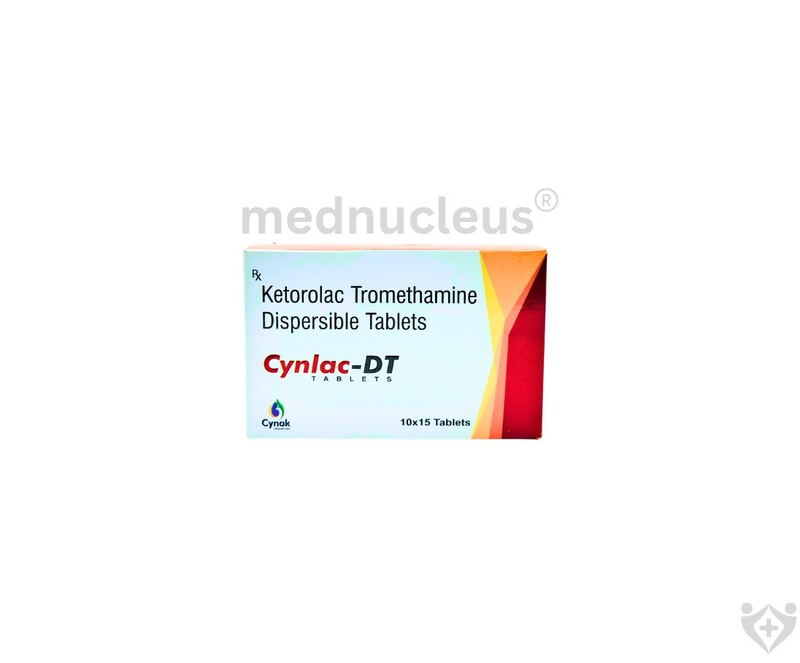
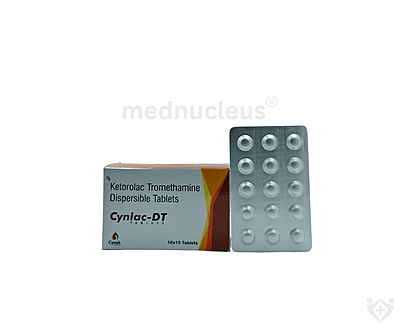
Category Name Pain Management — NSAID Analgesic (Short-Term Use Only)
Common Indications
- Short-term management of moderate to severe acute pain
- Post-operative pain management (after dental, orthopaedic, or minor surgical procedures)
- Renal colic and biliary colic (as adjunct)
- Musculoskeletal pain — sprains, strains, and acute back pain
- Post-traumatic pain and inflammation
- Headache and migraine (acute episode)
- Dysmenorrhoea (menstrual pain)
Ketorolac is indicated for short-term use only — not more than 5 days.
Common Dosing
- Standard Adult Dose: 10 mg (one dispersible tablet) every 4–6 hours as needed
- Maximum Daily Dose: 40 mg in 24 hours
- Dispersible Tablet: Dissolve in water before swallowing or place on tongue to dissolve
- Duration: Strictly limited to a maximum of 5 consecutive days
- Elderly Patients: Use lower doses (10 mg every 6–8 hours); maximum 60 mg/day
Always follow your doctor's prescribed dose and duration. Do not exceed 5 days of use.
Common Side Effects
- Nausea, vomiting, and stomach discomfort
- Headache and dizziness
- Drowsiness
- Gastric pain or heartburn
- Elevated blood pressure
Seek immediate attention for:
- Signs of GI bleeding — dark or tarry stools, vomiting blood
- Severe allergic reactions (bronchospasm, facial swelling)
- Reduced or no urination (acute kidney injury)
- Chest pain or signs of cardiovascular events
Common Interactions
- Anticoagulants (Warfarin, Heparin) — Significantly increases bleeding risk; avoid concurrent use
- Other NSAIDs or Aspirin — Combined use greatly increases GI bleeding and ulcer risk; avoid
- ACE Inhibitors, ARBs, Diuretics — May impair renal function; monitor kidney function
- Lithium and Methotrexate — Ketorolac increases their plasma levels and toxicity risk; avoid
- SSRIs — Combined use increases GI bleeding risk
- Probenecid — Increases Ketorolac plasma levels; avoid concurrent use
Special Instructions
| Condition | Guidance |
|---|---|
| 🤰 Pregnancy | Contraindicated in the third trimester. Avoid in first and second trimesters unless absolutely necessary under medical supervision. |
| 🤱 Breastfeeding | Not recommended. Passes into breast milk. |
| 🍺 Alcohol | Strictly avoid. Significantly increases risk of GI bleeding and stomach ulceration. |
| 🚗 Driving | May cause dizziness and drowsiness. Do not drive if affected. |
| 🫀 Liver Disease | Use with caution. Avoid in severe hepatic impairment. |
| 🫘 Kidney Disease | Contraindicated in significant renal impairment. Ketorolac is primarily renally eliminated and may cause acute kidney injury. |
Mechanism of Action Ketorolac is a potent, non-selective NSAID that inhibits both COX-1 and COX-2 enzymes, markedly reducing the biosynthesis of prostaglandins — the primary mediators of pain, inflammation, and fever. Ketorolac has strong analgesic potency comparable to moderate doses of opioids in acute pain settings, without the respiratory depression or dependence risk associated with opioids. The dispersible formulation allows faster dissolution and onset of action compared to standard tablets.
Instructions to Take
- Dissolve the tablet in half a glass of water before taking, or place on tongue to dissolve — do not swallow whole as a standard tablet
- Take with or after food to reduce risk of stomach irritation
- Do not use for more than 5 consecutive days under any circumstances
- Do not take more than 4 tablets in 24 hours
- Avoid all other NSAIDs or Aspirin during this course
- Stay well hydrated throughout use
- If you miss a dose, take as soon as remembered — do not double up
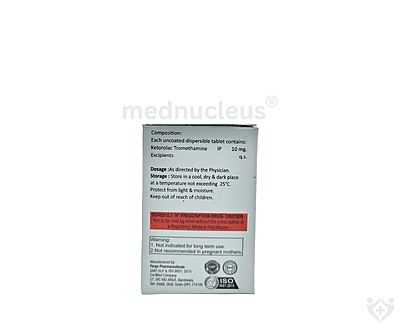
- Store in a cool, dry place away from moisture
This information is intended for general reference purposes only and should not be used as a substitute for professional medical advice, diagnosis, or treatment. Always consult a qualified healthcare professional before starting, changing, or stopping any medication.

