

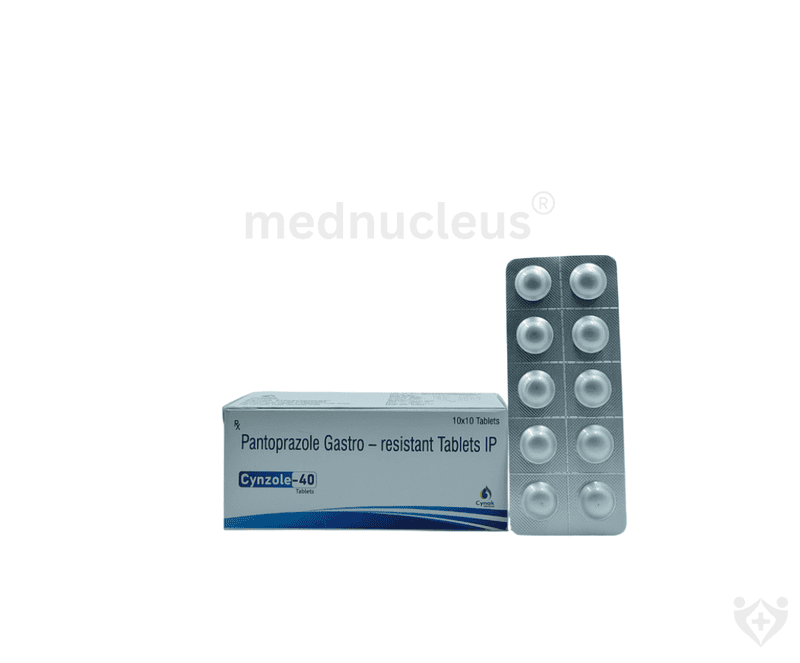
Category Name Gastro / Proton Pump Inhibitor (PPI) / Antacid
Common Indications CYNZOLE-40 is indicated for the management of acid-related gastrointestinal disorders requiring sustained and effective gastric acid suppression. It is commonly prescribed for:
- Gastroesophageal reflux disease (GERD) with symptoms of heartburn and acid regurgitation
- Erosive oesophagitis and reflux oesophagitis requiring mucosal healing
- Peptic ulcer disease including gastric and duodenal ulcers
- Helicobacter pylori eradication as part of combination antibiotic therapy
- Zollinger-Ellison syndrome — a rare condition characterised by excessive and uncontrolled gastric acid hypersecretion
- Non-steroidal anti-inflammatory drug (NSAID)-associated gastric ulcers and gastroprotection
- Stress ulcer prophylaxis in high-risk and critically ill patients
- Dyspepsia and acid-related upper gastrointestinal discomfort requiring acid suppression therapy
Common Dosings One tablet (40 mg) orally, once daily — preferably 30 to 60 minutes before the first meal of the day — or as directed by your physician. For conditions such as Zollinger-Ellison syndrome, the dose may be increased as determined by the treating physician. Swallow the tablet whole with a full glass of water. The dose and duration of therapy should be determined by the treating physician based on the diagnosis, severity of symptoms, and clinical response. Do not abruptly discontinue therapy without medical advice.
Common Side Effects The following side effects may occur during the course of treatment. Consult your doctor if any of these persist or worsen:
- Upper respiratory tract infection
- Dizziness or lightheadedness
- Nausea or upset stomach
- Abdominal pain or discomfort
- Flatulence or excessive gas
- Headache
- Vomiting
- Diarrhoea or loose stools
- Joint pain or arthralgia
- Skin rash or itching — inform your doctor promptly
- With prolonged use — risk of hypomagnesaemia (low magnesium), Vitamin B12 deficiency, and increased susceptibility to gastrointestinal infections
- Serious allergic reactions such as facial swelling, difficulty breathing, or severe skin reactions — seek immediate medical attention if severe
Common Interactions Inform your doctor about all medications, supplements, and herbal products you are currently taking. Notable interactions include:
- Ketoconazole, Itraconazole & Atazanavir: Pantoprazole reduces gastric acidity, significantly decreasing the absorption and plasma levels of these drugs and reducing their therapeutic effectiveness — concurrent use should be avoided where possible or managed with appropriate timing adjustments under medical supervision
- Warfarin: Concomitant use may increase the anticoagulant effect of Warfarin, elevating the risk of bleeding complications — regular INR monitoring is strongly recommended during concurrent therapy
- Methotrexate: At high doses, Pantoprazole may reduce renal excretion of Methotrexate, increasing its plasma concentration and the risk of serious toxicity — close clinical and laboratory monitoring is mandatory during concurrent use
- Other Proton Pump Inhibitors / Acid-Suppressing Agents: Concurrent use may cause excessive acid suppression and increase the risk of adverse effects — use only under strict medical supervision
- Iron Salts & Calcium Supplements: Elevated gastric pH due to Pantoprazole may reduce the absorption of iron and calcium — maintain appropriate time gaps between administration
- Clopidogrel: Pantoprazole may modestly reduce the activation of Clopidogrel via CYP2C19 inhibition — consult your cardiologist if concurrent use is required
Special Instructions
| Condition | Guidance |
|---|---|
| Pregnancy | Safety during pregnancy has not been established. Use only if clearly indicated and the potential benefit outweighs the risk — strictly under medical supervision with careful monitoring throughout therapy. |
| Breastfeeding | Adequate safety data during breastfeeding is not currently available. Use only if clearly indicated and under strict medical supervision — consult your doctor before use during lactation. |
| Alcohol | The safety of concurrent alcohol use has not been fully established. Alcohol may worsen acid reflux symptoms and gastrointestinal irritation — it is strongly advisable to avoid alcohol during therapy for optimal therapeutic benefit. |
| Driving & Machinery | Does not usually impair alertness or driving ability under normal conditions of use. However, exercise caution if you experience dizziness or headache and avoid driving or operating heavy machinery if these symptoms occur. |
| Liver Disease | Use with caution in patients with severe hepatic impairment. Pantoprazole is extensively metabolised in the liver — dose reduction and regular liver function monitoring may be required. Consult your physician before use in significant liver disease. |
| Kidney Disease | Generally considered safe to use in patients with renal impairment at recommended doses. No significant dose adjustment is typically required — however, consult your physician for individualised guidance and monitoring. |
Mechanism of Action CYNZOLE-40 contains Pantoprazole, a second-generation proton pump inhibitor (PPI) that provides potent, targeted, and sustained suppression of gastric acid secretion through a highly specific irreversible mechanism of action.
Pantoprazole is a prodrug that is absorbed from the small intestine and selectively concentrated in the highly acidic secretory canaliculi of the gastric parietal cells. In this acidic environment, it is rapidly converted to its active sulphenamide form, which covalently and irreversibly binds to cysteine residues on the alpha subunit of the hydrogen-potassium ATPase enzyme system — the gastric "proton pump." This enzyme is responsible for the final and rate-limiting step of gastric acid secretion, pumping hydrogen ions (protons) into the stomach lumen in exchange for potassium ions.
By irreversibly inactivating this proton pump, Pantoprazole effectively suppresses both basal and stimulated gastric acid secretion regardless of the triggering stimulus — whether hormonal (gastrin), neural (acetylcholine), or paracrine (histamine). This results in a profound and prolonged reduction in the volume and acidity of gastric secretions, raising intragastric pH and creating an optimal environment for the healing of acid-damaged mucosal tissue, relief of reflux symptoms, and eradication of Helicobacter pylori in combination with appropriate antibiotic therapy.
Pantoprazole's higher selectivity for the proton pump compared to earlier PPIs results in a more favourable drug interaction profile, making it a well-tolerated and highly effective first-line agent for the long-term management of acid-related gastrointestinal disorders.
Instructions to Take
- Take this tablet exactly as prescribed by your doctor
- Take 30 to 60 minutes before the first meal of the day (breakfast) for optimal acid suppression and therapeutic effect
- Swallow the tablet whole with a full glass of plain water — do not crush, split, break, or chew as the enteric coating is essential for proper drug delivery
- Take at the same time each day to maintain consistent gastric acid control
- Do not take antacids within 2 hours of taking this medicine unless specifically advised by your doctor
- For Helicobacter pylori eradication, take alongside the prescribed antibiotic combination as directed — complete the full course without interruption
- Maintain appropriate time gaps when taking iron salts, calcium supplements, or other medications whose absorption may be affected by elevated gastric pH
- Do not self-medicate, adjust the dose, or discontinue therapy without medical advice — even if symptoms improve significantly
- If a dose is missed, take it as soon as you remember — however, skip the missed dose if it is almost time for the next scheduled dose. Do not double the dose to make up for a missed one
- Avoid trigger foods and beverages that worsen acid reflux including spicy foods, citrus, caffeine, and carbonated drinks
- Avoid alcohol throughout the course of treatment
- Keep out of reach of children
- Store in a cool, dry place away from direct sunlight and moisture
Disclaimer: This information is intended for general reference purposes only and should not be used as a substitute for professional medical advice, diagnosis, or treatment. Always consult a qualified healthcare professional before starting, changing, or stopping any medication.

