

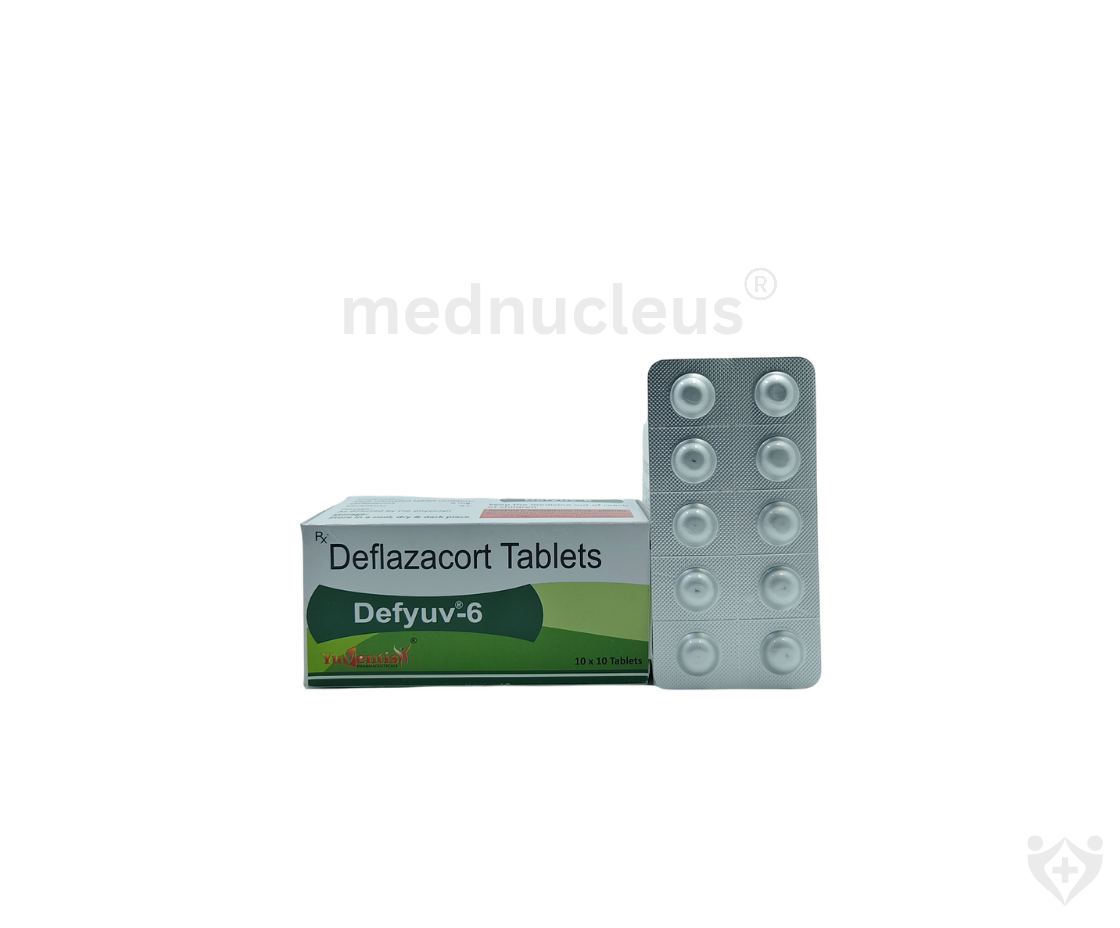
Category Name Supplements / Corticosteroid / Anti-Inflammatory & Immunosuppressant
Common Indications DEFYUV-6 is indicated for the management of inflammatory, autoimmune, and neuromuscular conditions requiring corticosteroid therapy. It is commonly prescribed for:
- Duchenne muscular dystrophy (DMD) — to reduce muscle inflammation and damage, support muscle strength, and slow the progression of muscle weakness over time
- Inflammatory and autoimmune conditions requiring systemic corticosteroid suppression
- Rheumatoid arthritis and other inflammatory joint disorders not adequately controlled by conventional therapy
- Allergic conditions and hypersensitivity reactions requiring corticosteroid intervention
- Organ transplant rejection prophylaxis as part of immunosuppressive therapy
- Systemic inflammatory conditions including lupus erythematosus and vasculitis
- Asthma and other chronic inflammatory respiratory conditions requiring short-term oral steroid therapy
- Dermatological inflammatory conditions requiring systemic corticosteroid management
Common Dosings One tablet (6 mg) orally, once daily — preferably in the morning after food — or as directed by your physician. The dose and frequency may vary significantly based on the condition being treated, the severity of symptoms, and the patient's age, weight, and clinical response. For Duchenne muscular dystrophy, dosing is typically weight-based and determined by the treating neurologist or specialist. Do not abruptly discontinue this medication — gradual dose tapering under strict medical supervision is mandatory to avoid adrenal insufficiency and withdrawal symptoms.
Common Side Effects The following side effects may occur during the course of treatment. Consult your doctor if any of these persist or worsen:
- Increased appetite and weight gain
- Obesity with prolonged use
- Frequent urge to urinate
- Cough and upper respiratory tract infections
- Nasopharyngitis (inflammation of the throat and nasal passages)
- Abnormal hair growth (hirsutism)
- Cushing's syndrome with prolonged high-dose use — characterised by facial puffiness (moon face), central weight gain, and stretch marks
- Elevated blood glucose levels — particularly in diabetic or pre-diabetic patients
- Increased susceptibility to infections due to immunosuppression
- Osteoporosis and bone mineral density loss with long-term use — calcium and Vitamin D supplementation may be recommended
- Mood changes, irritability, or sleep disturbances
- Elevated blood pressure with prolonged use
- Adrenal suppression with long-term therapy — never stop abruptly
- Serious allergic reactions such as facial swelling or difficulty breathing — seek immediate medical attention if severe
Common Interactions Inform your doctor about all medications, supplements, and herbal products you are currently taking. Notable interactions include:
- NSAIDs (Ibuprofen, Diclofenac): Concurrent use significantly increases the risk of gastrointestinal irritation, ulcers, and bleeding — avoid combination use without strict medical supervision and consider gastric protection
- Antidiabetic Drugs (Insulin, Oral Hypoglycaemics): Deflazacort may elevate blood glucose levels, reducing the effectiveness of antidiabetic medications — blood glucose monitoring should be intensified and antidiabetic dose adjustment may be required
- Enzyme-Inducing Drugs (Rifampicin, Phenytoin, Carbamazepine, Phenobarbital): May significantly accelerate the metabolism of Deflazacort, reducing its plasma concentration and therapeutic effectiveness — dose adjustment of the corticosteroid may be required
- Antifungal Agents (Ketoconazole): May inhibit the metabolism of Deflazacort, increasing its plasma levels and the risk of corticosteroid-related adverse effects — dose reduction and close monitoring are recommended
- Diuretics: Concurrent use may increase the risk of electrolyte imbalances, particularly hypokalaemia (low potassium) — regular serum electrolyte monitoring is strongly advised
- Immunosuppressants (Cyclosporine): Combined use may significantly increase the risk of serious infections and other immunosuppression-related complications — use only under close specialist supervision
- Live Vaccines: Concurrent corticosteroid use may impair immune response to live vaccines and increase the risk of vaccine-associated infections — vaccination should be carefully planned in consultation with the treating physician
- Anticoagulants (Warfarin): Corticosteroids may alter the anticoagulant effect of Warfarin — regular INR monitoring is recommended during concurrent use
Special Instructions
| Condition | Guidance |
|---|---|
| Pregnancy | Safety during pregnancy has not been established. Corticosteroids may affect foetal development — use only if clearly indicated and the potential benefit outweighs the risk. Strictly under medical supervision with close foetal monitoring throughout therapy. |
| Breastfeeding | May be unsafe during lactation. Deflazacort may pass into breast milk and may affect the nursing infant. Consult your doctor before use and consider a safer alternative during breastfeeding. |
| Alcohol | The safety of concurrent alcohol use has not been fully established. Alcohol may increase the risk of gastrointestinal bleeding, elevate blood glucose, and counteract the therapeutic benefits of corticosteroid therapy — it is strongly advisable to avoid alcohol during treatment. |
| Driving & Machinery | It is not fully established whether Deflazacort alters the ability to drive. Exercise caution if you experience dizziness, mood changes, or visual disturbances, and avoid driving or operating heavy machinery if these symptoms occur. |
| Liver Disease | Limited clinical data available in patients with hepatic impairment. Use with caution as Deflazacort is metabolised in the liver — regular liver function monitoring and dose adjustment may be required. Consult your physician for individualised guidance. |
| Kidney Disease | Limited clinical data available in patients with renal impairment. Use with caution and under close medical supervision — regular monitoring of renal function, blood pressure, and electrolytes is recommended. Consult your physician before use. |
Mechanism of Action DEFYUV-6 contains Deflazacort, a synthetic oxazoline derivative of prednisolone and a potent corticosteroid that exerts its therapeutic effect through broad anti-inflammatory and immunosuppressive mechanisms:
Deflazacort works primarily by binding to intracellular glucocorticoid receptors (GRs) in target cells, forming a receptor-ligand complex that translocates to the cell nucleus. Here, it modulates gene transcription by upregulating anti-inflammatory proteins (lipocortin/annexin-1) and downregulating pro-inflammatory mediators including cytokines (interleukins, TNF-alpha), prostaglandins, leukotrienes, and other inflammatory enzymes such as phospholipase A2 and cyclo-oxygenase. This effectively reduces the formation and release of substances responsible for triggering and sustaining inflammation throughout the body.
In Duchenne muscular dystrophy (DMD), the absence of dystrophin protein leads to repeated cycles of muscle fibre damage, inflammation, and progressive replacement of muscle tissue with fibrotic and fatty tissue. Deflazacort reduces this inflammatory cascade within the skeletal muscle, decreasing muscle fibre necrosis and inflammation-driven damage, thereby preserving muscle cell integrity, supporting residual muscle strength, and slowing the rate of functional decline over time.
Deflazacort is associated with a relatively lower incidence of weight gain and metabolic side effects compared to prednisolone, making it a preferred corticosteroid for long-term use in paediatric patients with DMD. Its immunosuppressive action also prevents autoimmune self-damage in organ transplant and inflammatory conditions by suppressing T-lymphocyte activation and reducing antibody-mediated immune responses.
Instructions to Take
- Take this tablet exactly as prescribed by your doctor
- Always take in the morning after food to reduce the risk of stomach irritation, insomnia, and to align with the body's natural cortisol rhythm
- Swallow the tablet whole with a full glass of water — do not crush, split, or chew unless advised
- Take at the same time each day to maintain consistent drug levels and optimal therapeutic effect
- Do not abruptly discontinue this medication under any circumstances — the adrenal glands may become suppressed during long-term therapy and require gradual dose tapering to safely restore normal function. Always consult your doctor before stopping or reducing the dose
- Monitor blood glucose levels regularly — particularly if you are diabetic or pre-diabetic — as corticosteroids may elevate blood sugar levels
- Monitor blood pressure regularly during the course of therapy
- Attend regular follow-up appointments for monitoring of bone density, blood glucose, electrolytes, and overall clinical response as advised by your physician
- Ensure adequate calcium and Vitamin D intake during long-term therapy to protect bone health — your doctor may prescribe supplemental calcium and Vitamin D alongside this medication
- Inform all treating physicians, dentists, and healthcare providers that you are on corticosteroid therapy — particularly before any surgical procedure or vaccination
- Do not receive live vaccines during corticosteroid therapy without consulting your doctor
- Do not self-medicate, adjust the dose, or add other anti-inflammatory medications without medical advice
- If a dose is missed, take it as soon as you remember — however, skip the missed dose if it is almost time for the next scheduled dose. Do not double the dose to make up for a missed one
- Avoid alcohol throughout the course of treatment
- Keep out of reach of children
- Store in a cool, dry place away from direct sunlight and moisture
Disclaimer: This information is intended for general reference purposes only and should not be used as a substitute for professional medical advice, diagnosis, or treatment. Always consult a qualified healthcare professional before starting, changing, or stopping any medication.

