

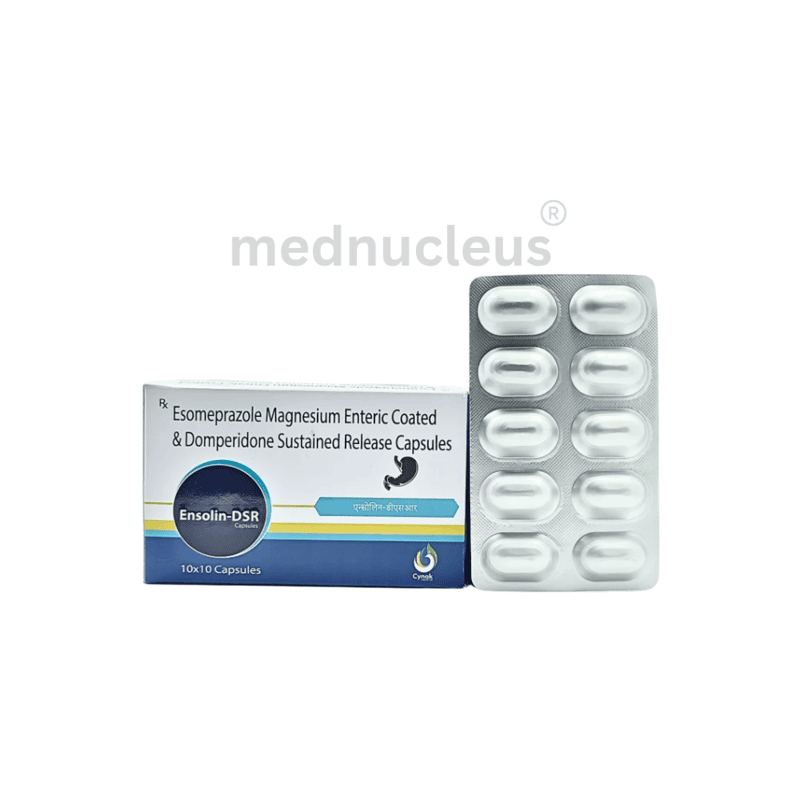
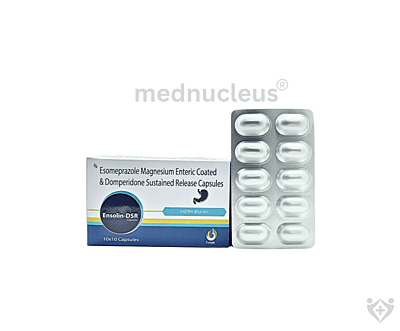
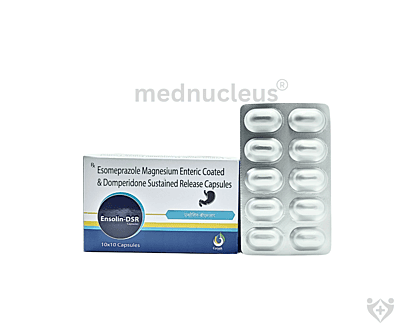
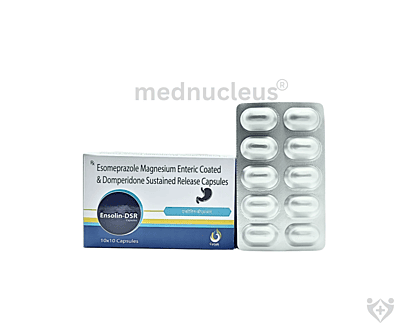
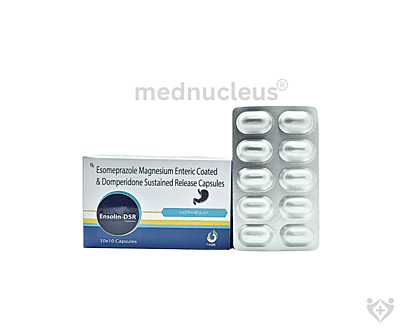
Category Name Gastroenterology — Proton Pump Inhibitor (PPI) + Prokinetic Agent Combination
Common Indications Ensolin DSR Capsule is used to treat acid-related and motility disorders of the upper digestive tract, including:
- Gastroesophageal Reflux Disease (GERD / Acid Reflux)
- Heartburn and acid-related chest discomfort
- Stomach pain and irritation caused by excess acid
- Functional dyspepsia with symptoms of bloating, nausea, and early fullness
- Regurgitation and delayed gastric emptying
- Erosive esophagitis and gastric ulcer management
Common Dosing
- Standard Adult Dose: One capsule once daily, preferably 30–60 minutes before a meal
- Preferred Timing: Best taken before breakfast for optimal acid suppression throughout the day
- Duration: Typically 4–8 weeks, or as prescribed by your doctor depending on the condition
- Sustained Release (SR) Formulation: Designed for controlled drug delivery — must not be crushed or chewed
- Elderly Patients: Use under medical supervision; dose adjustment may be required based on overall health and organ function
Always follow your doctor's prescribed dose and duration.
Common Side Effects Ensolin DSR is generally well tolerated. Reported side effects may include:
- Dryness in mouth
- Nausea
- Headache
- Diarrhea
- Flatulence (gas)
- Stomach pain or discomfort
Seek immediate medical attention if you experience:
- Palpitations or irregular heartbeat
- Severe allergic reactions (rash, swelling, difficulty breathing)
- Persistent or worsening abdominal symptoms
Contact your doctor if any side effect persists or becomes bothersome.
Common Interactions Inform your doctor or pharmacist about all medications, supplements, and herbal products you are currently taking. Notable interactions include:
- QT-prolonging drugs — Macrolide Antibiotics (e.g., Erythromycin, Clarithromycin) — Concurrent use with Domperidone significantly increases the risk of serious cardiac arrhythmias; avoid co-administration
- Antifungal agents (e.g., Ketoconazole, Itraconazole) — Interact with both components; Domperidone raises cardiac risk while Esomeprazole reduces their absorption by lowering gastric acidity
- Antiarrhythmic drugs (e.g., Amiodarone, Sotalol) — May further prolong the QT interval when used alongside Domperidone; concurrent use should be avoided
- Antiretrovirals (e.g., Atazanavir) — Esomeprazole significantly reduces absorption and effectiveness; co-administration is generally not recommended
- Warfarin — Esomeprazole may elevate Warfarin blood levels by inhibiting liver metabolism, increasing the risk of bleeding; regular INR monitoring is advised
- Diazepam and Phenytoin — Esomeprazole may increase the plasma levels of these drugs by slowing their hepatic breakdown, potentially intensifying their effects or side effects
Special Instructions
| Condition | Guidance |
|---|---|
| 🤰 Pregnancy | Ensolin DSR is not recommended during pregnancy. Sufficient safety data is not available for either component in pregnant women. Use only under strict medical supervision if absolutely necessary. |
| 🤱 Breastfeeding | This medication is considered unsafe during breastfeeding. Active components may pass into breast milk and potentially affect the nursing infant. Consult your doctor for a safer alternative if breastfeeding. |
| 🍺 Alcohol | It is not known whether alcohol interacts safely with this medicine. As a precaution, alcohol should be avoided during treatment, as it can worsen acid reflux symptoms and increase the risk of gastric irritation. |
| 🚗 Driving | This capsule may cause dizziness, drowsiness, or visual disturbances in some individuals. Do not drive, operate heavy machinery, or engage in activities requiring sharp mental focus if these symptoms occur. |
| 🫀 Liver Disease | Use with caution in patients with severe liver disease. Esomeprazole is extensively metabolized in the liver, and impaired liver function may significantly increase drug exposure. Dose reduction and close monitoring may be required. |
| 🫘 Kidney Disease | Use with caution in patients with severe kidney disease. While dose adjustment is not usually required for mild to moderate impairment, closer monitoring is advised in severe cases. |
Mechanism of Action Ensolin DSR Capsule combines two medicines that work through complementary mechanisms to provide complete relief from upper gastrointestinal symptoms:
- Esomeprazole (Proton Pump Inhibitor — PPI): The S-isomer of Omeprazole, Esomeprazole irreversibly binds to and inhibits the hydrogen-potassium ATPase enzyme (proton pump) in the stomach's parietal cells. This directly and potently suppresses gastric acid secretion, relieving heartburn, reducing stomach irritation, and promoting healing of the esophagus and gastric lining
- Domperidone (Prokinetic Agent): Blocks peripheral dopamine D2 receptors in the upper gastrointestinal tract and acts on gastric motility centers, accelerating stomach emptying and improving the coordinated movement of food from the stomach into the intestines. This effectively reduces bloating, nausea, regurgitation, and the uncomfortable sensation of food stagnating in the stomach
Together, they address both the root cause (excess acid) and the aggravating factor (slow gastric emptying) of upper GI disorders.
Instructions to Take
- Take this capsule 30–60 minutes before a meal, preferably before breakfast
- Swallow the capsule whole with a full glass of water — do not crush, split, or chew, as this is a sustained-release formulation and breaking it may affect drug delivery and cause side effects
- Take it at the same time each day for consistent results
- Complete the full prescribed course even if you begin to feel better, to ensure complete healing and prevent recurrence
- Do not self-medicate or continue beyond the prescribed duration without consulting your doctor
- If you miss a dose, take it as soon as you remember. If it is close to your next scheduled dose, skip the missed dose — do not double up
- Store in a cool, dry place away from direct sunlight and humidity. Keep out of reach of children
This information is intended for general reference purposes only and should not be used as a substitute for professional medical advice, diagnosis, or treatment. Always consult a qualified healthcare professional before starting, changing, or stopping any medication.

