

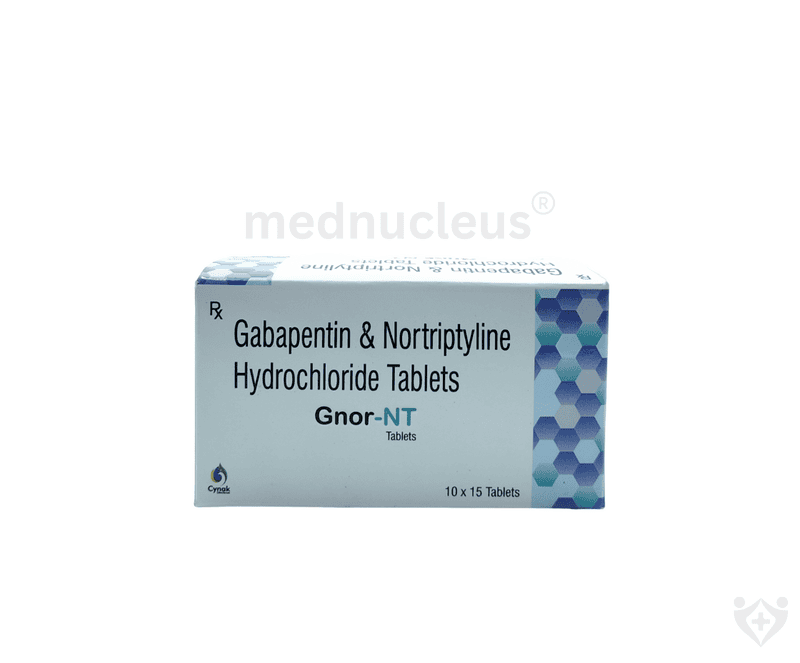
Category Name Neuro / Neuropathic Pain Management / Anticonvulsant & Tricyclic Antidepressant Combination
Common Indications GNOR-NT is indicated for the management of neuropathic pain arising from nerve damage or dysfunction requiring combined anticonvulsant and antidepressant analgesic therapy. It is commonly prescribed for:
- Diabetic peripheral neuropathy with associated burning, tingling, and shooting pain
- Post-herpetic neuralgia (nerve pain following shingles)
- Fibromyalgia and widespread chronic musculoskeletal pain
- Neuropathic pain associated with spinal cord injury
- Peripheral neuropathy due to chemotherapy, alcohol, or other systemic causes
- Chronic nerve pain associated with multiple sclerosis or other neurological conditions
- Mixed neuropathic and musculoskeletal pain requiring combined analgesic and mood-stabilising therapy
- Adjunct therapy for chronic pain syndromes not adequately controlled by conventional analgesics alone
Common Dosings One tablet (Gabapentin 100 mg + Nortriptyline 10 mg) orally, once or twice daily as prescribed — preferably at bedtime to minimise daytime drowsiness — or as directed by your physician. The dose may be gradually titrated upward by the treating physician based on clinical response and tolerability. Therapeutic effects may take 2 to 4 weeks to become fully apparent. Do not abruptly discontinue this medication — gradual dose tapering under medical supervision is required to avoid withdrawal symptoms and seizure risk associated with sudden Gabapentin discontinuation.
Common Side Effects The following side effects may occur during the course of treatment. Consult your doctor if any of these persist or worsen:
- Sleepiness or excessive drowsiness
- Tiredness or fatigue
- Dizziness or lightheadedness
- Uncoordinated body movements (ataxia)
- Blurred vision
- Dryness of mouth
- Constipation
- Difficulty in urination or urinary retention
- Weight gain with prolonged use
- Peripheral oedema (swelling of ankles and feet)
- Increased heart rate (palpitations)
- Orthostatic hypotension (sudden drop in blood pressure upon standing) — rise slowly from a sitting or lying position
- Indigestion or stomach discomfort
- Insomnia or sleep disturbances
- Impotence or sexual dysfunction with prolonged use
- Decreased white blood cell count (detected on routine blood tests) — inform your doctor promptly
- Weakness or general malaise
- Serious allergic reactions such as rash, facial swelling, or difficulty breathing — seek immediate medical attention if severe
Common Interactions Inform your doctor about all medications, supplements, and herbal products you are currently taking. Notable interactions include:
- Alcohol / Opioids / Benzodiazepines / CNS Depressants: Concurrent use may significantly increase drowsiness, dizziness, impaired coordination, and dangerous CNS and respiratory depression — strictly avoid combination use
- MAO Inhibitors (MAOIs): Concomitant use with Nortriptyline is strictly contraindicated and may lead to life-threatening reactions including severe hypertension, high fever, and serotonin syndrome. A minimum washout period of 14 days is mandatory before switching between these medications
- SSRIs & Other Antidepressants: May interact with Nortriptyline, increasing the risk of serotonin syndrome characterised by agitation, rapid heartbeat, excessive sweating, and confusion — seek immediate medical attention if these symptoms occur
- Antihistamines & Antipsychotic Medications: Gabapentin may enhance their sedative effects — use only under strict medical supervision
- Antacids (Aluminium or Magnesium-Containing): May reduce the absorption of Gabapentin — administer GNOR-NT at least 2 hours after antacid use
- Cardiac Conduction-Affecting Drugs: Drugs that prolong the QT interval or affect heart rhythm may increase the risk of serious cardiac arrhythmias when used with Nortriptyline — always inform your cardiologist of concurrent use
- Anticholinergic Medications: Combined use may significantly increase anticholinergic side effects such as dry mouth, constipation, urinary retention, and blurred vision — use with caution under medical supervision
Special Instructions
| Condition | Guidance |
|---|---|
| Pregnancy | Adequate safety data during pregnancy is not currently available for this combination. Use only if clearly indicated and under strict medical supervision after careful benefit-risk evaluation by the treating physician. |
| Breastfeeding | Adequate safety data during breastfeeding is not currently available. Consult your doctor before use during lactation and consider a safer alternative where possible. |
| Alcohol | Strictly avoid alcohol during therapy. Concurrent use may cause dangerous levels of CNS depression, excessive sedation, severely impaired coordination, and respiratory depression. |
| Driving & Machinery | This medicine significantly impairs alertness, vision, and coordination — particularly during the initial weeks of therapy. Avoid driving or operating heavy machinery until you know how this medication affects you and your alertness has been fully assessed. |
| Liver Disease | Use with caution in patients with hepatic impairment. Both components may require dose adjustment and regular liver function monitoring — consult your physician before use. |
| Kidney Disease | Use with caution in patients with renal impairment. Gabapentin is primarily excreted by the kidneys — dose adjustment based on creatinine clearance is mandatory in renal insufficiency. Consult your physician before use for individualised dosing guidance. |
Mechanism of Action GNOR-NT combines two active ingredients, each working through a distinct and complementary neurochemical mechanism to provide comprehensive neuropathic pain relief:
Gabapentin (100 mg): A structural analogue of gamma-aminobutyric acid (GABA) that functions as an alpha-2-delta (α2δ) calcium channel ligand in the central and peripheral nervous system. Despite its structural similarity to GABA, Gabapentin does not act directly on GABA receptors. Instead, it binds with high affinity to the alpha-2-delta subunit of voltage-gated calcium channels at presynaptic nerve terminals in the spinal dorsal horn and brain. This binding reduces calcium influx at excited nerve terminals, decreasing the release of excitatory neurotransmitters — including glutamate, substance P, and noradrenaline — that are responsible for amplifying and sustaining neuropathic pain signals. By dampening this hyperexcitable neuronal firing, Gabapentin effectively reduces abnormal pain signalling and the perception of chronic neuropathic pain
Nortriptyline (10 mg): A secondary amine tricyclic antidepressant (TCA) that works primarily by inhibiting the presynaptic reuptake of serotonin and noradrenaline in the central nervous system. By increasing the synaptic availability of these neurotransmitters, Nortriptyline enhances the brain's descending pain inhibitory pathways — the endogenous system that modulates and suppresses pain signal transmission from the periphery to the brain. This central pain-modulating action effectively reduces the perception and intensity of chronic neuropathic pain, independent of its antidepressant effect. Additionally, Nortriptyline's mild sedative properties provide secondary benefits in improving sleep quality commonly disrupted by chronic pain conditions
Together, by combining calcium channel modulation and reduced excitatory neurotransmitter release (Gabapentin) with enhanced descending pain inhibition through serotonin and noradrenaline reuptake blockade (Nortriptyline), GNOR-NT provides a synergistic dual-mechanism approach to neuropathic pain management — achieving more effective and sustained pain relief than either agent alone.
Instructions to Take
- Take this tablet exactly as prescribed by your doctor
- Preferably take at bedtime after a meal to minimise daytime drowsiness, reduce the risk of stomach discomfort, and take advantage of Nortriptyline's sedative properties for improved sleep quality
- Swallow the tablet whole with a full glass of water — do not crush, split, or chew
- Do not take simultaneously with antacids containing aluminium or magnesium — maintain a gap of at least 2 hours to ensure optimal Gabapentin absorption
- Take at the same time each day to maintain consistent drug levels in the body
- Therapeutic effects for neuropathic pain may take 2 to 4 weeks to become fully apparent — continue taking as prescribed even if improvement is not immediately felt
- Do not abruptly discontinue this medication — sudden withdrawal of Gabapentin may cause rebound pain, anxiety, insomnia, and in some cases seizures. Always taper the dose gradually under strict medical supervision
- Rise slowly from a sitting or lying position to minimise the risk of dizziness or sudden drop in blood pressure
- Inform your doctor immediately if you experience unusual changes in mood, increased anxiety, agitation, or thoughts of self-harm — particularly during the early weeks of therapy
- Do not self-medicate, adjust the dose, or add other CNS-acting medications without consulting your doctor
- If a dose is missed, take it as soon as you remember — however, skip the missed dose if it is almost time for the next scheduled dose. Do not double the dose to make up for a missed one
- Strictly avoid alcohol throughout the entire course of treatment
- Keep out of reach of children
- Store in a cool, dry place away from direct sunlight and moisture
Disclaimer: This information is intended for general reference purposes only and should not be used as a substitute for professional medical advice, diagnosis, or treatment. Always consult a qualified healthcare professional before starting, changing, or stopping any medication.

