

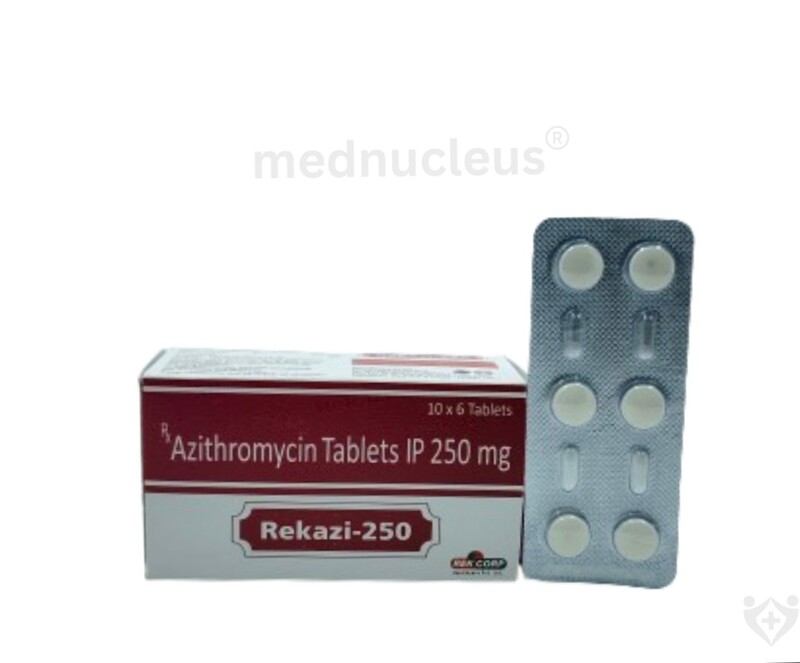
Category Name Anti-Infectives — Macrolide Antibiotic
Common Indications
- Community-acquired pneumonia (mild to moderate)
- Upper respiratory tract infections — pharyngitis, tonsillitis, sinusitis
- Bronchitis and lower respiratory tract infections
- Skin and soft tissue infections
- Sexually transmitted infections — Chlamydia, gonorrhoea (as part of combination)
- Enteric fever and typhoid (as adjunct)
- Ear infections (otitis media) in adults
- Atypical pneumonia caused by Mycoplasma pneumoniae, Chlamydophila pneumoniae
Common Dosing
- Standard Adult Dose: 500 mg (two 250 mg tablets) on Day 1, followed by 250 mg once daily for Days 2–5 (Z-pack / 5-day course)
- STI (Chlamydia): 1 g (four 250 mg tablets) as a single dose
- Take on an empty stomach or at least 1 hour before or 2 hours after meals for optimal absorption
- Duration: As prescribed — complete the full course
Always follow your doctor's prescribed dose and duration.
Common Side Effects
- Nausea, vomiting, and diarrhoea
- Abdominal pain or cramping
- Headache
- Dizziness
- Skin rash
- Altered taste (dysgeusia)
Seek immediate attention for:
- Severe allergic reactions or anaphylaxis
- Cardiac palpitations or irregular heartbeat — QT prolongation risk
- Severe diarrhoea with blood or mucus
Common Interactions
- Antacids containing aluminium or magnesium — Reduce Azithromycin absorption; separate by 2 hours
- Warfarin — May enhance anticoagulant effect; monitor INR
- QT-prolonging drugs (e.g., Amiodarone, Domperidone, Haloperidol) — Increased risk of serious cardiac arrhythmia; avoid concurrent use
- Digoxin — Azithromycin may increase Digoxin levels
- Ergot alkaloids — Risk of ergotism; avoid concurrent use
Special Instructions
| Condition | Guidance |
|---|---|
| 🤰 Pregnancy | Use with caution. Generally considered relatively safe but consult your doctor before use. |
| 🤱 Breastfeeding | Use with caution. Passes into breast milk. Monitor infant for diarrhoea or rash. |
| 🍺 Alcohol | Avoid during antibiotic course to support recovery and reduce GI side effects. |
| 🚗 Driving | May cause dizziness. Exercise caution. |
| 🫀 Liver Disease | Use with caution. Azithromycin is primarily liver-eliminated. Avoid in severe hepatic impairment. |
| 🫘 Kidney Disease | Generally safe at standard doses. Use with caution in severe renal impairment. |
Mechanism of Action Azithromycin is a macrolide antibiotic that binds to the 50S ribosomal subunit of susceptible bacteria, inhibiting bacterial protein synthesis by blocking translocation of peptidyl-tRNA. It has a uniquely long tissue half-life (68 hours), allowing it to achieve high and sustained drug concentrations at the site of infection with short-course dosing. It is bacteriostatic at standard doses and has additional anti-inflammatory and immunomodulatory properties.
Instructions to Take
- Take on an empty stomach, at least 1 hour before or 2 hours after meals
- Swallow whole with a full glass of water
- Separate from antacids by at least 2 hours
- Complete the full prescribed course even if feeling better
- Do not take double doses if a dose is missed
- Store in a cool, dry place away from sunlight and moisture
This information is intended for general reference purposes only and should not be used as a substitute for professional medical advice, diagnosis, or treatment. Always consult a qualified healthcare professional before starting, changing, or stopping any medication.

