

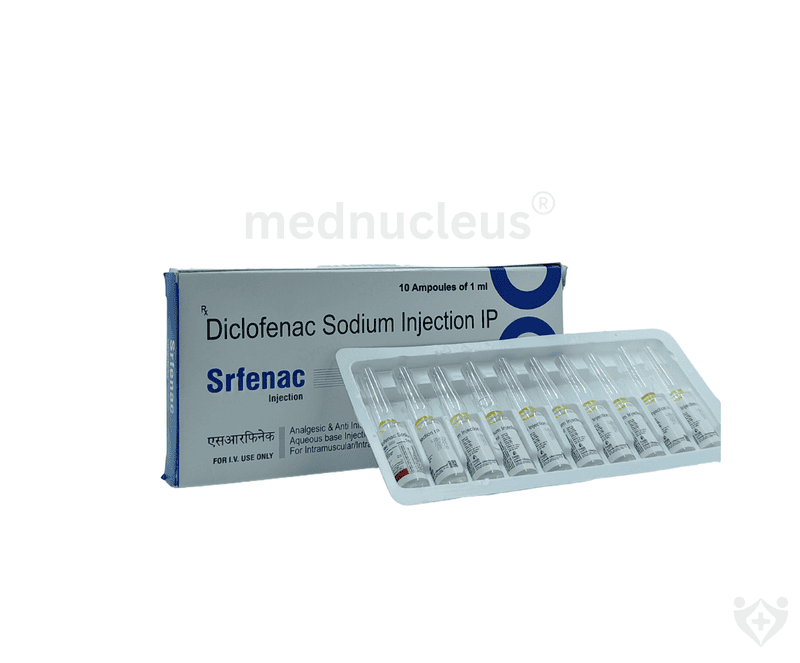
Category Name Pain Management — NSAID Analgesic & Anti-Inflammatory Injection (Hospital / Clinical Use)
Common Indications Srfenac Injection is used in clinical settings for:
- Moderate to severe acute pain requiring rapid NSAID analgesia
- Post-operative pain and inflammation
- Renal colic — one of the most effective agents for acute ureteric/renal colic
- Acute musculoskeletal pain — back pain, sciatica, shoulder pain
- Acute gout attacks
- Biliary colic
- Post-traumatic pain and inflammation
- Acute dysmenorrhoea unresponsive to oral therapy
- Migraine headache (acute parenteral management)
Common Dosing
- Standard Adult Dose: 75 mg (one ampoule) administered by deep intramuscular (IM) injection, once or twice daily
- Maximum Daily Dose: 150 mg (two injections in 24 hours)
- Duration: Short-term use only — typically 1–3 days, transitioning to oral NSAIDs
- Administered by healthcare professionals only — deep IM injection into the upper outer gluteal muscle
For clinical use only — administered by trained healthcare professionals.
Common Side Effects
- Pain or soreness at the injection site
- Nausea and stomach discomfort
- Headache and dizziness
- Elevated liver enzymes
- Fluid retention
Seek immediate medical attention for:
- Severe allergic reaction or anaphylaxis
- Signs of GI bleeding — dark stools, vomiting blood
- Severe skin reactions
- Acute kidney injury — reduced urine output, ankle swelling
Common Interactions
- Anticoagulants (Warfarin, Heparin) — Significantly increases bleeding risk; monitor INR
- Other NSAIDs or Aspirin — Avoid concurrent use; additive GI and renal toxicity
- ACE Inhibitors, ARBs, Diuretics — May impair renal function with concurrent NSAID use
- Lithium and Digoxin — Diclofenac may increase their plasma levels
- Methotrexate — May increase methotrexate toxicity at high doses
- Corticosteroids — Concurrent use increases GI ulcer and bleeding risk
Special Instructions
| Condition | Guidance |
|---|---|
| 🤰 Pregnancy | Contraindicated in the third trimester. Avoid in earlier stages unless clearly necessary under medical supervision. |
| 🤱 Breastfeeding | Not recommended. Small amounts pass into breast milk. |
| 🍺 Alcohol | Not applicable in clinical injection setting. Avoid alcohol during treatment period. |
| 🚗 Driving | Not applicable during inpatient/clinical use. Once discharged, exercise caution due to possible dizziness. |
| 🫀 Liver Disease | Use with caution. Avoid in severe hepatic impairment. Monitor liver enzymes. |
| 🫘 Kidney Disease | Avoid in significant renal impairment. Diclofenac may reduce renal blood flow and precipitate acute kidney injury. |
Mechanism of Action Diclofenac Sodium is a potent non-selective NSAID that inhibits both COX-1 and COX-2 enzymes, markedly reducing prostaglandin synthesis at sites of tissue injury and inflammation. The intramuscular route of administration provides rapid systemic absorption — achieving peak plasma levels within 20–30 minutes — delivering fast-onset, potent analgesia and anti-inflammatory action. Diclofenac also has unique additional mechanisms including inhibition of arachidonic acid release and modulation of central pain pathways, contributing to its superior analgesic efficacy in visceral pain conditions such as renal colic.
Instructions for Administration
- For IM use only — administered by trained healthcare professionals
- Administer as a deep intramuscular injection into the upper outer quadrant of the gluteus muscle
- Do not administer intravenously or subcutaneously
- Inspect the ampoule visually before use — do not use if discoloured or particulate matter is present
- Rotate injection sites if repeated doses are needed
- Transition to oral Diclofenac as soon as clinically feasible
- Store ampoules in a cool, dry place protected from light. Keep out of reach of children
This information is intended for general reference purposes only and should not be used as a substitute for professional medical advice, diagnosis, or treatment. Always consult a qualified healthcare professional before starting, changing, or stopping any medication.

