

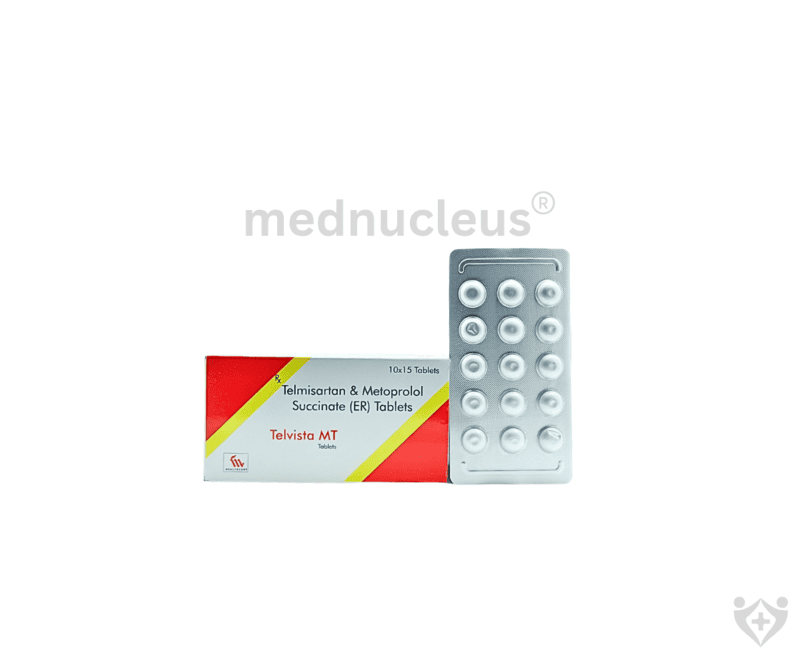
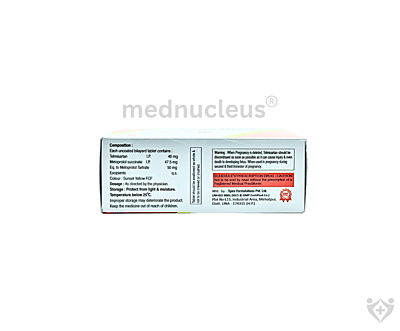
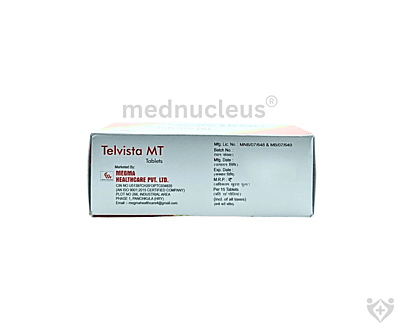
Category Name Cardio-Diabetic — Antihypertensive Combination (ARB + Selective Beta-Blocker)
Common Indications Telvista MT Tablet is used in the management of:
- Hypertension (high blood pressure) where single-agent therapy is insufficient to achieve target blood pressure
- Reduction of the risk of major cardiovascular events such as heart attack (myocardial infarction) and stroke in high-risk patients
- Improved survival and cardiac recovery in patients following a heart attack
- Chronic stable angina (chest pain due to reduced blood flow to the heart)
- Heart failure with reduced ejection fraction, as part of a comprehensive cardiac management plan
- As an adjunct to lifestyle modifications including a low-sodium diet, regular exercise, smoking cessation, and weight management
This medicine is for long-term use and should not be discontinued without medical advice.
Common Dosing
- Standard Adult Dose: One tablet once daily, with or without food, or as prescribed by your doctor
- Extended Release (ER) Formulation: Designed for sustained, controlled release over 24 hours — must not be crushed or chewed
- Timing: Preferably taken at the same time each day, ideally in the morning, for consistent blood pressure control
- Dose Adjustment: Your doctor will determine the appropriate dose and may titrate based on blood pressure response, heart rate, and individual tolerability
- Elderly Patients: Use with extra caution; lower starting doses and closer monitoring of blood pressure and heart rate may be required
Always follow your doctor's prescribed dose and duration. Never self-adjust or abruptly stop this medication.
Common Side Effects Most side effects are mild and tend to improve as the body adjusts to the medication. These may include:
- Dizziness
- Headache
- Weakness or fatigue
- Slow heart rate (bradycardia)
- Cold hands and feet (cold extremities)
- Decreased blood pressure (hypotension)
- Orthostatic hypotension (sudden drop in blood pressure upon standing up)
- Breathlessness
- Nausea or vomiting
- Abdominal pain
- Elevated potassium levels in the blood (hyperkalemia)
Seek immediate medical attention if you experience:
- Severely slow or irregular heartbeat
- Sudden difficulty breathing or worsening shortness of breath
- Chest pain or tightness
- Significant swelling of the face, lips, throat, or limbs — possible signs of a serious allergic reaction
- Fainting or near-fainting episodes
Report any persistent or worsening side effects to your doctor promptly.
Common Interactions Inform your doctor or pharmacist about all medications, supplements, and herbal products you are currently taking. Notable interactions include:
- Other Antihypertensive Agents, Diuretics, or Vasodilators — Concurrent use may significantly enhance the blood pressure-lowering effect, leading to excessive hypotension; close monitoring is essential
- Potassium Supplements or Potassium-Sparing Diuretics (e.g., Spironolactone, Amiloride) — Telmisartan may increase the risk of dangerously elevated potassium levels (hyperkalemia); regular electrolyte monitoring is required
- Calcium Channel Blockers (e.g., Verapamil, Diltiazem) — Concurrent use with Metoprolol significantly increases the risk of bradycardia (slow heart rate) and atrioventricular heart block; this combination requires careful cardiac monitoring
- NSAIDs (e.g., Ibuprofen, Diclofenac, Naproxen) — May reduce the antihypertensive effectiveness of both components and impair kidney function, particularly with long-term use; avoid concurrent use where possible
- Antidiabetic Drugs — Metoprolol may mask the early warning signs of hypoglycemia (such as rapid heartbeat) in diabetic patients; close blood glucose monitoring is advised
- Digoxin — Concurrent use with Metoprolol may further slow the heart rate; careful cardiac monitoring is warranted
Special Instructions
| Condition | Guidance |
|---|---|
| 🤰 Pregnancy | Telvista MT is highly unsafe during pregnancy, particularly from the second trimester onward. Telmisartan (an ARB) can cause serious fetal harm including kidney damage, reduced amniotic fluid, skeletal deformities, and fetal death. Discontinue immediately upon confirmation of pregnancy and consult your doctor for a safer alternative. |
| 🤱 Breastfeeding | This medication may be unsafe during breastfeeding. Both Telmisartan and Metoprolol may pass into breast milk. The potential risk to the nursing infant means that breastfeeding is generally not recommended during treatment. Consult your doctor for a suitable alternative. |
| 🍺 Alcohol | Alcohol should be used with caution or avoided during treatment. Alcohol can enhance the blood pressure-lowering effect of this medication, increasing the risk of dizziness, lightheadedness, fainting, and orthostatic hypotension. |
| 🚗 Driving | This medicine may cause dizziness, weakness, or sudden drops in blood pressure, particularly during the initial period of treatment or after dose adjustments. Do not drive, operate heavy machinery, or engage in tasks requiring high alertness until you know how this medicine affects you. |
| 🫀 Liver Disease | This medication is unsafe in patients with significant liver disease and should be avoided. Telmisartan is primarily eliminated via the liver, and hepatic impairment can lead to markedly increased drug levels and a heightened risk of adverse effects. Consult your doctor for an appropriate alternative. |
| 🫘 Kidney Disease | Use with caution in patients with kidney disease. Telmisartan may affect renal function and potassium balance, while Metoprolol requires careful monitoring in renal impairment. Regular kidney function and electrolyte assessments are recommended during treatment. |
Mechanism of Action Telvista MT Tablet combines two antihypertensive agents that work through distinct but synergistic mechanisms to achieve comprehensive and sustained blood pressure control:
Telmisartan (Angiotensin II Receptor Blocker — ARB): Selectively and competitively blocks the binding of Angiotensin II to AT₁ receptors found in vascular smooth muscle and the adrenal glands. Angiotensin II is a potent vasoconstrictor that also promotes aldosterone release (causing sodium and water retention). By blocking these AT₁ receptors, Telmisartan causes relaxation and widening of blood vessels (vasodilation), reduces fluid retention, and lowers peripheral vascular resistance — resulting in a significant and sustained reduction in blood pressure. Notably, Telmisartan has one of the longest half-lives among ARBs, providing consistent 24-hour blood pressure control with once-daily dosing
Metoprolol Succinate (Selective β₁-Adrenergic Blocker): Selectively blocks beta-1 adrenergic receptors in the heart, reducing the influence of the sympathetic nervous system on cardiac function. This results in a reduction in heart rate (negative chronotropy), decrease in the force of cardiac contraction (negative inotropy), lowering of cardiac output, and suppression of renin release from the kidneys — all of which contribute to a meaningful reduction in blood pressure. The extended-release formulation ensures smooth, consistent beta-blockade over 24 hours, avoiding the peaks and troughs associated with immediate-release formulations
Together, they address both the vascular component (vessel tone and constriction via ARB) and the cardiac component (heart rate and output via beta-blocker) of hypertension, delivering superior and complementary blood pressure reduction with added cardiovascular protection.
Instructions to Take
- Take this tablet with or without food, at the same time every day — preferably in the morning — for consistent blood pressure control throughout the day
- Swallow the tablet whole with a full glass of water — do not crush, split, or chew, as this is an extended-release formulation and altering it may cause too much medication to be released at once
- Never stop this medication abruptly — sudden discontinuation of Metoprolol can trigger rebound hypertension, angina, or even a heart attack in susceptible individuals. Always taper the dose gradually under medical supervision
- Monitor your blood pressure and heart rate regularly at home if advised, and keep a log to share at follow-up appointments
- Rise slowly from a sitting or lying position to reduce the risk of dizziness or fainting due to orthostatic hypotension
- Inform all your healthcare providers (including dentists and surgeons) that you are on this medication, especially before any surgical procedure or emergency treatment
- If you miss a dose, take it as soon as you remember on the same day. If it is the next day, skip the missed dose — do not double up
- Store in a cool, dry place away from direct sunlight and moisture. Keep out of reach of children
This information is intended for general reference purposes only and should not be used as a substitute for professional medical advice, diagnosis, or treatment. Always consult a qualified healthcare professional before starting, changing, or stopping any medication.

