

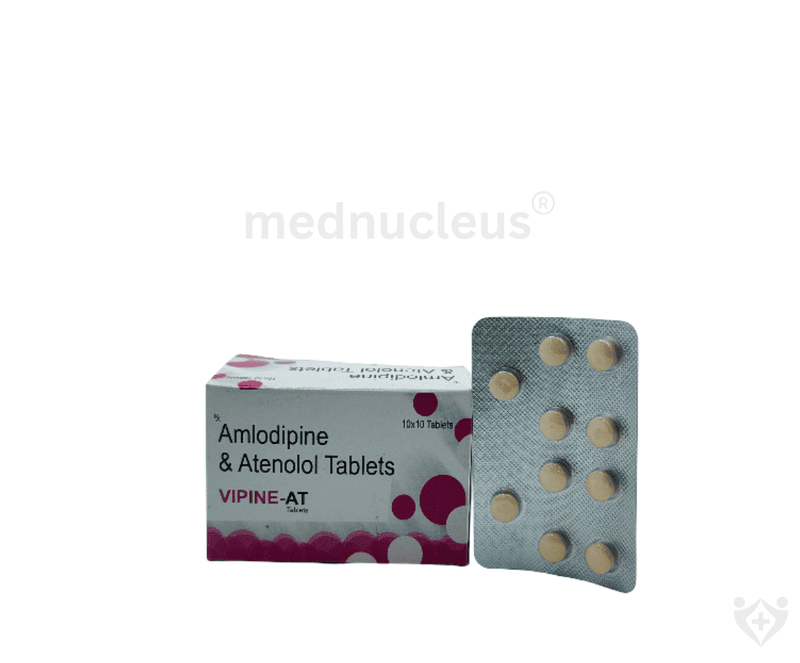
Category Name Cardio-Diabetic / Calcium Channel Blocker & Beta-Blocker / Antihypertensive
Common Indications VIPINE-AT is indicated for the management of cardiovascular conditions requiring combined blood pressure control and cardiac rate regulation. It is commonly prescribed for:
- Hypertension (high blood pressure) — particularly when a single antihypertensive agent is insufficient for adequate blood pressure control
- Stable and unstable angina (heart-related chest pain)
- Prevention of future heart attack (myocardial infarction) in high-risk patients
- Reduction of the risk of stroke associated with uncontrolled hypertension
- Tachycardia (elevated heart rate) requiring beta-blockade in combination with vasodilation
- Long-term cardiovascular risk reduction in patients with coexisting hypertension and angina
Common Dosings One tablet (Amlodipine 5 mg + Atenolol 50 mg) orally, once daily — with or without food — or as directed by your physician. Take at the same time each day to maintain consistent blood pressure and heart rate control. The dose may be adjusted by the treating physician based on individual clinical response, blood pressure targets, and tolerability. Do not abruptly discontinue this medication without consulting your doctor, as sudden withdrawal — particularly of Atenolol — may cause rebound hypertension or worsening of angina.
Common Side Effects The following side effects may occur during the course of treatment. Consult your doctor if any of these persist or worsen:
- Headache
- Constipation
- Tiredness or fatigue
- Cold extremities (hands and feet)
- Dizziness or lightheadedness — particularly upon standing
- Bradycardia (slow heart rate) — inform your doctor if your heart rate drops significantly
- Peripheral oedema (swelling of the ankles or feet)
- Shortness of breath in susceptible patients
- Serious allergic reactions such as rash, facial swelling, or difficulty breathing — seek immediate medical attention if severe
Common Interactions Inform your doctor about all medications, supplements, and herbal products you are currently taking. Notable interactions include:
- Other Antihypertensives / Diuretics / Vasodilators: Concurrent use may significantly enhance the blood pressure-lowering effect, potentially causing excessive hypotension — use under close medical supervision with regular blood pressure monitoring
- Calcium Channel Blockers (Verapamil, Diltiazem): Concomitant use with Atenolol may increase the risk of bradycardia and heart block — avoid combination unless under strict cardiac monitoring
- Digoxin: Combined use with Atenolol may further slow the heart rate, increasing the risk of bradycardia — regular cardiac monitoring is recommended
- CYP3A4 Inhibitors (Ketoconazole, Erythromycin): May increase the plasma concentration of Amlodipine, enhancing its hypotensive effects and the risk of adverse reactions — dose adjustment may be required
- Non-Steroidal Anti-Inflammatory Drugs (NSAIDs): May reduce the antihypertensive effectiveness of both components — avoid long-term concurrent use without medical supervision
- Antidiabetic Medications: Atenolol may mask the symptoms of hypoglycaemia (such as rapid heartbeat) in diabetic patients — blood glucose monitoring should be intensified
Special Instructions
| Condition | Guidance |
|---|---|
| Pregnancy | Highly unsafe during pregnancy. May cause serious harm to the unborn baby including birth defects and pregnancy loss. Strictly contraindicated — do not use without explicit medical direction and close foetal monitoring. |
| Breastfeeding | Unsafe to use during lactation. Both Amlodipine and Atenolol may pass into breast milk. Consult your doctor and consider a safer alternative during breastfeeding. |
| Alcohol | Use with caution. Alcohol may enhance the blood pressure-lowering effect of this medicine, increasing the risk of dizziness, lightheadedness, and fainting — limit or avoid alcohol during therapy. |
| Driving & Machinery | May cause dizziness, fatigue, or visual disturbances that could impair driving ability. Avoid driving or operating heavy machinery until you know how this medication affects you. |
| Liver Disease | Limited clinical data available. Use with caution in patients with hepatic impairment as Amlodipine is extensively metabolised in the liver. Consult your physician for individualised dosing guidance. |
| Kidney Disease | Limited clinical data available. Use with caution in patients with renal impairment as Atenolol is primarily excreted by the kidneys. Dose adjustment and regular renal function monitoring may be required — consult your physician before use. |
Mechanism of Action VIPINE-AT combines two active ingredients from different pharmacological classes, each working through a distinct and complementary mechanism to provide superior blood pressure and heart rate control:
Amlodipine (5 mg): A third-generation dihydropyridine calcium channel blocker that selectively inhibits the influx of calcium ions through voltage-gated L-type calcium channels in peripheral vascular smooth muscle cells. This causes relaxation and dilation of peripheral arterioles, reducing peripheral vascular resistance and lowering blood pressure. It also improves coronary blood flow and oxygen delivery to the heart, providing effective relief from angina
Atenolol (50 mg): A selective beta-1 adrenergic receptor blocker that acts specifically on the heart by blocking the effects of catecholamines (adrenaline and noradrenaline) on beta-1 receptors. This reduces the heart rate, decreases the force of cardiac contraction, and lowers cardiac output, collectively reducing the workload on the heart and lowering blood pressure. Its cardioselective action minimises the bronchospastic side effects associated with non-selective beta-blockers
Together, by combining vasodilation (Amlodipine) with cardiac rate and output reduction (Atenolol), VIPINE-AT provides a synergistic dual-mechanism approach to blood pressure management, achieving more effective and sustained cardiovascular control than either agent alone.
Instructions to Take
- Take this tablet exactly as prescribed by your doctor
- May be taken with or without food — however, take it at the same time each day to maintain consistent blood pressure and heart rate control
- Swallow the tablet whole with a full glass of water — do not crush, split, or chew
- Monitor your blood pressure and heart rate regularly as advised by your physician and report any unusual fluctuations
- Do not abruptly stop this medication — particularly due to the Atenolol component. Sudden discontinuation may cause rebound hypertension, worsening of angina, or risk of heart attack. Always taper the dose gradually under medical supervision
- Rise slowly from a sitting or lying position to minimise the risk of dizziness or sudden drop in blood pressure
- Diabetic patients should monitor blood glucose levels closely as Atenolol may mask signs of hypoglycaemia
- Do not self-medicate, adjust the dose, or add other blood pressure or heart medications without medical advice
- If a dose is missed, take it as soon as you remember — however, skip the missed dose if it is almost time for the next scheduled dose. Do not double the dose to make up for a missed one
- Limit or avoid alcohol throughout the course of treatment
- Keep out of reach of children
- Store in a cool, dry place away from direct sunlight and moisture
Disclaimer: This information is intended for general reference purposes only and should not be used as a substitute for professional medical advice, diagnosis, or treatment. Always consult a qualified healthcare professional before starting, changing, or stopping any medication.

